

When choosing an outdoor shelter, durability is often one of the first concerns. Campers want a tent that can withstand repeated setup, changing weather, and regular transportation without becoming difficult to carry. This raises an important question: is traditional tent pole technology more durable than an air beam system?
The answer depends on how the tent is designed and where it will be used. Tent poles provide a rigid structural framework, while air beam systems rely on inflatable chambers to create support. Each approach has practical advantages, but structural design, materials, connections, and load distribution can be just as important as the support technology itself.
For users comparing products from thecatal outdoor, understanding these differences can make it easier to select equipment according to real camping conditions rather than focusing on one feature alone.
How Tent Pole Technology Supports Durability
Tent pole technology has been used for decades because rigid poles can provide predictable structural support. Depending on the design, poles can distribute the tension of the tent fabric and help maintain the shelter's shape when wind or external pressure is applied.
One benefit is mechanical simplicity. A pole can be inspected before use, assembled directly into its corresponding structure, and replaced if necessary. There is no need to maintain air pressure during camping. For backpackers and users who frequently camp in changing environments, this can provide practical confidence.
However, durability does not simply depend on having more poles. A complicated frame can increase weight, packing volume, and the number of joints that need to be handled. A well engineered structure can achieve a useful balance between support and portability by reducing unnecessary components.
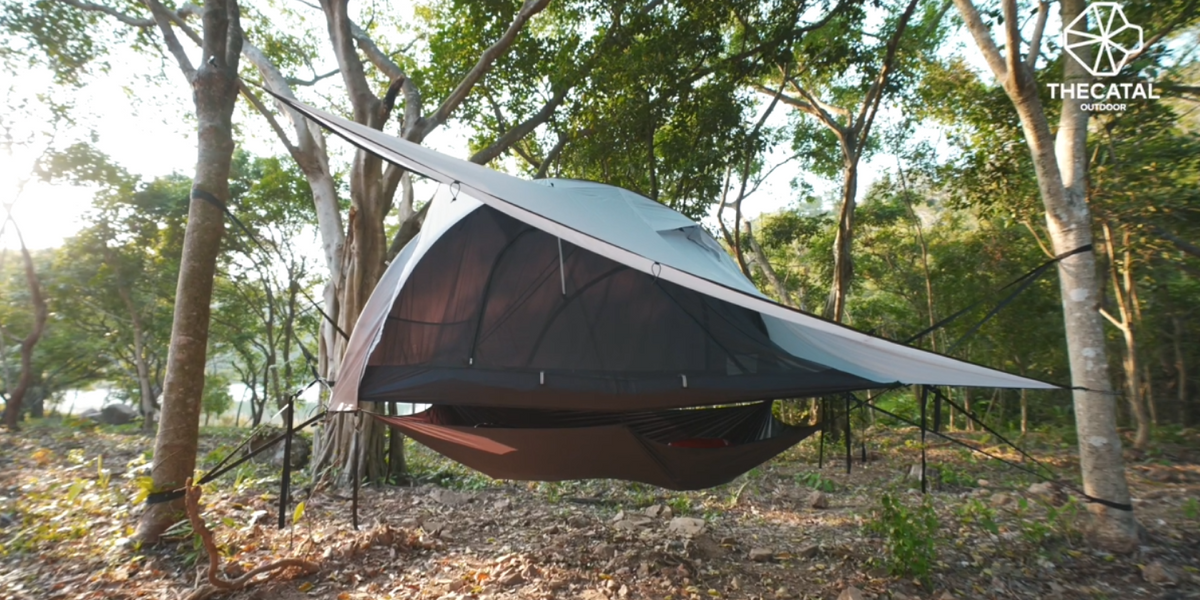
THECATAL's Wind Anchor provides an example of this approach. The brand describes its design as using a single arch structure rather than a conventional multi pole frame, combining structural geometry with lightweight materials to reduce overall construction complexity.
Are Air Beam Systems More Resistant to Damage?
Air beam systems have a different operating principle. Instead of rigid poles, inflatable chambers become the primary structural elements after being filled with air. This can make setup relatively convenient and can create spacious interiors without requiring users to connect numerous rigid sections.
However, air pressure becomes an important part of structural performance. Punctures, valve problems, or gradual pressure loss can affect the shape and stability of the shelter. For this reason, users should consider repairability and maintenance when evaluating an air beam tent.
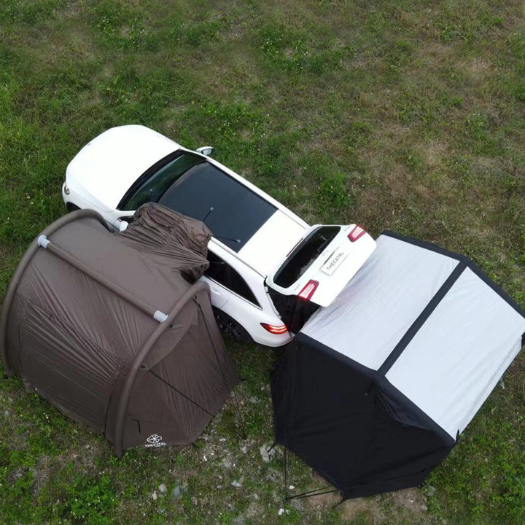
This does not mean air beam systems are inherently fragile. Their performance depends on the quality of the chamber materials, reinforcement, valves, seams, and overall engineering. For family camping and vehicle based camping, where weight is less critical than interior space and convenient setup, an air supported structure may be a suitable choice.
Why Geometry Can Matter More Than the Number of Poles
A common assumption is that adding more poles automatically makes a tent stronger. In reality, the geometry of the shelter determines how forces move through the structure.
A streamlined tent profile can reduce the amount of surface directly exposed to wind. THECATAL's Wind Anchor uses a semi conical spatial design that directs the shelter toward a more aerodynamic form. According to THECATAL, this approach is intended to manage wind forces while maintaining a lightweight structure.
This is an important consideration when evaluating tent pole technology. A single pole system does not necessarily mean reduced durability if the pole position, fabric tension, anchoring points, and shelter geometry work together effectively.
For outdoor users, this means durability should be evaluated as a complete system rather than by counting poles or comparing pole and air beam structures in isolation.
What Should Campers Look for in a Durable Tent?
When choosing a tent, users should consider several practical factors. The first is the expected environment. A lightweight hiking shelter has different requirements from a large family camping tent. Backpackers may prioritize low weight and compact packing, while vehicle campers may place greater value on interior space and setup convenience.
Material quality is equally important. Ripstop fabrics, reinforced attachment points, reliable seams, and suitable coatings can all influence how a shelter performs over time. THECATAL states that it works with factories and suppliers while continuously testing and auditing products against its standards.
Maintenance should also be part of the purchasing decision. Users should check whether replacement poles, stakes, guy lines, or other components are available. THECATAL's outdoor equipment collection includes dedicated accessories such as Wind Anchor tent poles, guy lines, ground spikes, and repair related products.
Where THECATAL Fits Into Modern Tent Design
THECATAL Outdoor approaches outdoor equipment through what it describes as ecological innovation, combining structural ideas, material development, and practical outdoor applications. Its product portfolio includes lightweight hiking tents, car camping and mountaineering tents, hammock systems, and accessories.
The Wind Anchor illustrates how tent pole technology can be reconsidered through structural design. Rather than simply adding components to increase strength, the design focuses on the relationship between the supporting pole, fabric tension, and overall shelter geometry. This can be particularly relevant for hikers who need a compact shelter without unnecessary structural weight.
The broader lesson is that durability should be considered alongside portability, setup time, weather resistance, repairability, and intended use.
Conclusion
So, is tent pole technology more durable than an air beam system? There is no universal answer. Rigid poles offer predictable structural support and straightforward maintenance, while air beam systems can provide convenient setup and spacious designs. The better choice depends on the materials, engineering, environment, and user's priorities.
For campers exploring thecatal outdoor equipment, THECATAL demonstrates another approach by combining tent pole technology with aerodynamic structural design and lightweight construction. Rather than judging durability solely by the support system, users should examine how every part of the tent works together. A well designed shelter should provide an appropriate balance of strength, weight, stability, usability, and long term maintenance for the conditions in which it will actually be used.

Leave a comment
This site is protected by hCaptcha and the hCaptcha Privacy Policy and Terms of Service apply.