
Choosing an ultralight tent usually means sacrificing some stability. But for a thru-hiker, the stakes are high: will that lightweight shelter keep you safe when the wind picks up and the mercury drops?
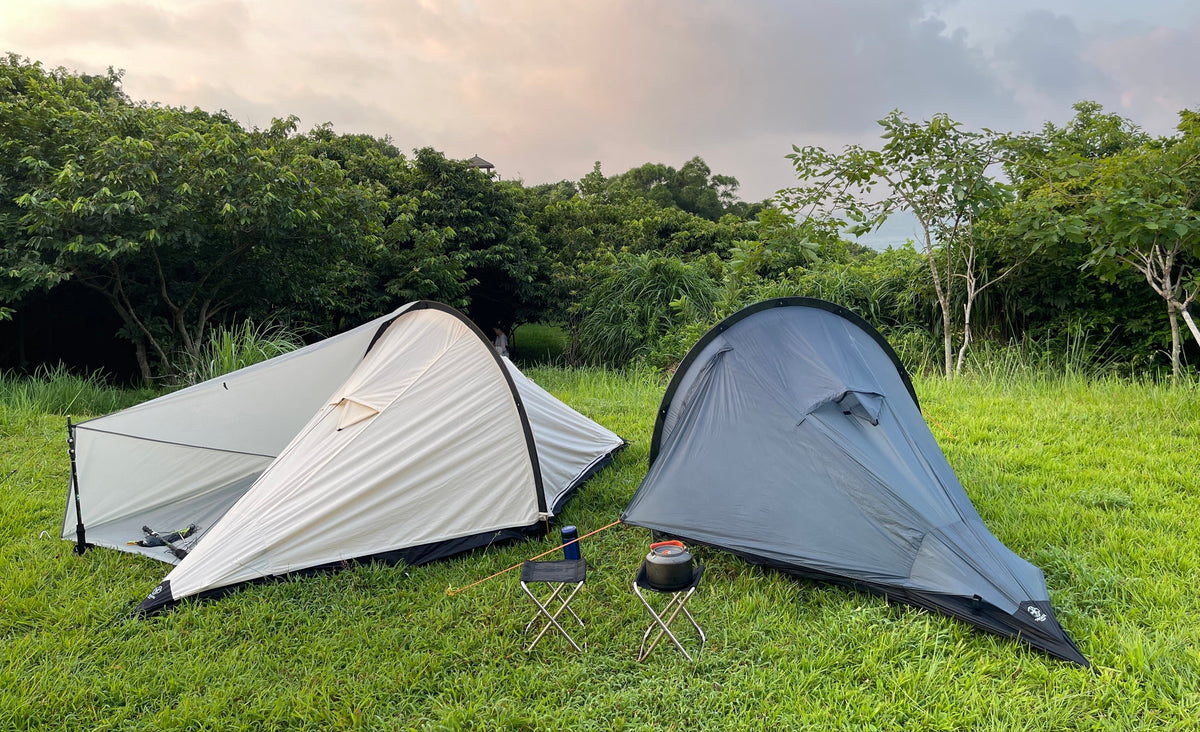
THECATAL's Wind Anchor Adventure Tent challenges the long-held assumption that lightweight means fragile, balancing these extremes through its distinctive single-arch geometry and aerodynamic profile.

What Determines a Tent's Wind Resistance?
Several key factors determine a wind-resistant tent’s ability to withstand extreme weather.
1. Geometry
The shape of a tent directly influences its drag coefficient and lateral surface area. Low-profile, streamlined structures, such as conical, arched, or semi-conical forms, allow airflow to follow the contours of the shelter, minimizing pressure buildup.
In contrast, tall, upright profiles present a larger frontal area, forcing wind to exert direct force against the walls and generating greater lateral thrust.
2. Pole System Rigidity and Configuration
The pole framework bears structural loads and transfers forces from the fabric to the ground. The rigidity, number, orientation, and intersections of poles collectively determine how a camping tent structure behaves under multi-directional wind loads.
Multi-pole configurations, such as three-pole or four-pole systems, distribute wind forces across multiple anchor points, creating a three-dimensional load path. When wind direction shifts, different poles absorb varying components of the load.
3. Anchoring System
The anchoring system, consisting of stakes and guy lines, secures the tent to the ground, resisting uplift and lateral movement. Its effectiveness depends on three factors:
Stake Quantity and Type: A greater number of anchor points distributes loads more evenly, lowering the risk of individual failure. Stake length, cross-sectional shape, and surface treatment all affect pullout resistance across different terrain types.
Guy Line Layout and Angle: The closer a guy line runs to the ground, the stronger its horizontal restraining force. A well-conceived layout creates a tension network that stabilizes the structure from multiple directions.
Load Path Efficiency: The more direct the force path from fabric to poles to guy lines to stakes, the less energy is lost to structural flex or slack.
4. Fabric Tension
Controlling fabric tension prevents flogging, a phenomenon where wind causes the fabric to snap and flutter, generating cyclic shock loads that can gradually loosen stakes, fatigue seams, or initiate tears.
Catenary cutting is a technique in which fabric panel edges are cut along a curved line, ensuring the panels tension themselves when pitched. Fabric held under high pretension resists flogging effectively, transferring wind loads continuously into the frame and anchoring system rather than subjecting localized points to abrupt impacts.
5. Boundary Strength and Durability
Boundary areas, including seams, zippers, pole sleeves, and guy line attachment points, experience higher cyclic stress under sustained wind than the main fabric body. The fatigue life of these components often defines the overall durability of a wind-resistant tent.
Factors such as stitching method, seam tape adhesion, zipper lateral strength, and reinforcement density at attachment points all influence how well the tent withstands prolonged wind exposure. In high-wind environments, failure typically originates at these boundaries before the primary fabric gives way.
Core Approaches to Weight Reduction
1. Low Denier Fabrics
Denier is a unit of measurement indicating fiber fineness; lower values translate to thinner, lighter fabrics. Ultralight tents frequently employ 10D, 15D, or 20D nylon or polyester, with some premium models utilizing DCF.
Under dynamic wind loading, thin fabrics are more susceptible to microcracks and plastic deformation, and tears are more likely to initiate at stress concentration points such as stitch lines or zipper edges.
2. Reducing Dedicated Poles
Some ultralight tents reduce the number of poles to save weight, opting for a single- or two-pole architecture .
Although these approaches significantly slash weight and bulk, they lack structural redundancy; single poles face extreme bending moments under lateral winds, and load capacity drops sharply when wind direction shifts.
Should a localized failure occur, such as a bent or broken support pole, it can very easily trigger the complete collapse of the tent.
3. Single Wall Construction
Traditional double-wall tents consist of an inner tent and a separate rainfly with an air gap in between. Ultralight tents often employ single-wall or semi-single-wall construction, omitting the inner layer to shed weight. With only a single fabric barrier between occupants and the elements, wind pressure acts directly against the sole layer, and users may perceive a noticeable drop in stability.
4. Fewer and Lighter Stakes
To shave grams, UL tents often use fewer, shorter, and thinner stakes. Under high wind loads, a single loosened stake rapidly transfers stress to the remaining anchors, triggering a systemic failure. Furthermore, lightweight stakes offer limited holding power in challenging terrains like soft sand or frozen ground.
While sufficient for sheltered or predictable environments, these tents hit their limit when faced with off-axis gusts or terrain where stakes cannot be securely driven.
How Wind Anchor Achieves the Balance
To understand how the THECATAL’s Wind Anchor functions as both a lightweight hiking tent and a wind-resistant tent, its engineering can be examined across four key areas.
1. Advanced Material
The Wind Anchor series utilizes silicone-enhanced nylon (20D for the Standard; 10D for the Pro).
Unlike conventional ultralight shelters that rely on single-sided silicone or PU coatings, this tent features Coatforce Ripstop technology , which saturates both sides of the fabric with silicone.
This dual-sided treatment significantly bolsters the strength-to-weight ratio by reinforcing the bond between individual fibers, achieving superior tear resistance compared to single-coated alternatives of the same denier.

2. Structural Weight Reduction
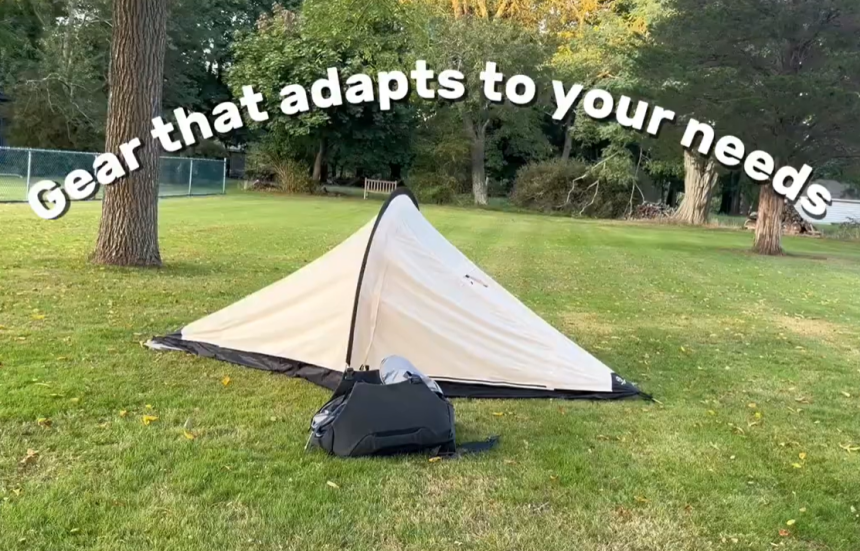
Wind Anchor adopts a single-arch structure, eliminating the multi-pole frame systems commonly found in traditional tents. This approach lowers the number and weight of frame components at a systemic level, bringing the minimum assembled weight to under 1 kg (Standard) or 650 grams (Pro).
3. Wind Resistance System
(1) Aerodynamic Semi-Conical Shape
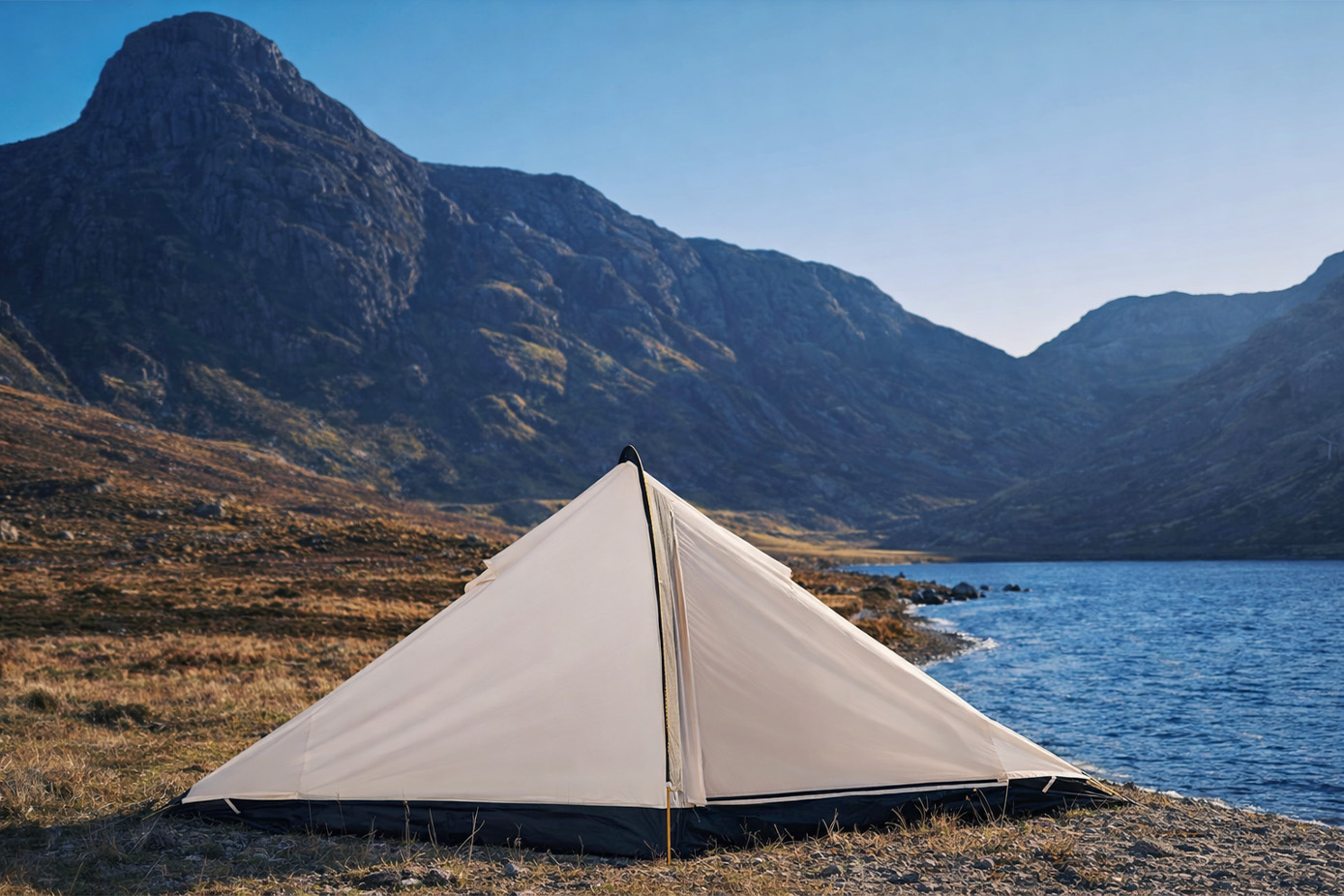
Built with a streamlined double-cone geometry, the tent guides wind smoothly around the structure, limiting pressure buildup and lateral exposure.
(2) UADAS (UniArc Dual-Anchor Shell Structure)
The single-arch structure creates a continuous load path, transferring wind forces along the arched frame to the dual anchor points at each end, establishing stable mechanical boundaries.
(3) 360° Flow-Through Window System
Crosswinds pose one of the greatest challenges to tent stability. Wind Anchor incorporates flow-through windows that allow air to pass through the interior rather than exerting force entirely on the outer surface. This design decreases lateral loads by dissipating wind energy through the windows while minimizing internal condensation through improved air circulation.
(4) Mechanical Pretension
Wind Anchor employs a mechanical pretension mechanism that keeps the fabric taut after setup.
Under pretension, wind forces transfer continuously to the frame and anchoring system rather than impacting localized points, reducing the risk of stakes pulling out and minimizing fatigue accumulation in the fabric and seams.
4. Terrain Adaptability
Wind Anchor supports two setup configurations:
Freestanding Mode: Uses standard anchoring methods on terrain where stakes can be driven
Non-freestanding Mode: Relies on weighting (rocks, packs) or trekking poles for anchoring on rocky or hard ground
When paired with the flysheet, wind reinforcement provides 2.5-layer waterproof protection rated at 5000 mm, making the system suitable for extreme environments, including high altitudes and polar regions.

Conclusion
The tension between ultralight design and wind resistance has long been framed as an unavoidable trade-off.
Our Wind Anchor Adventure Tent demonstrates that this trade-off, while real, is not absolute. Through a combination of advanced material engineering and system-level engineering, it achieves a balance that challenges traditional assumptions.

Leave a comment
This site is protected by hCaptcha and the hCaptcha Privacy Policy and Terms of Service apply.